Initiating
Whole soaring elaborateness involving modern automobiles presses for an detailed comprehension of diagnostic frameworks, exclusively touching on On-Board Diagnostics II (OBD2) and Tire Pressure Monitoring Platforms (TPMS). Within Europe, Asia, and the US, these advancements apply using discrete frequencies. OBD2 directives are largely aligned globally, essentially utilizing ISO 9141-50, KWP2000, CAN, and others, but regional enforcements can yield minor modifications. TPMS, however, is where substantial frequency differences come up. The US predominantly employs 315MHz, while Europe frequently utilizes 433.92MHz, and Asia displays a more varied range including both frequencies and extra bands. Accordingly, exact diagnostic devices must be furnished with the ability to interpret these countless frequencies to promote effective maintenance and maintenance.
Unpacking TPMS Sensor Frequencies: A Global Guide (Europe, North America, Asia)
Grasping tire pressure monitoring contraption (TPMS) gauge spectra in the globe can be tough. Ordinarily, North regions mostly utilize 315 MHz, despite some latest vehicles adopt 433 MHz. Conversely, Europe and most of Asia predominantly act on the 433 MHz channel, with some local variations emerging chiefly in some Asian countries. Accordingly, essential to verify the precise wavelength before get hold of TPMS detectors to ensure agreement and escape prospective difficulties.
Electric Car Diagnosticians: OBD2 Compatibility and TPMS Integration
State-of-the-art electrical car inspection gadgets are increasingly blending important functionality, chiefly centered on both typical On-Board Diagnostics II (OBD2) compatibility and Tire Pressure Monitoring System (TPMS) union. Many eco-friendly cars utilize OBD2 ports for extracting important system records, facilitating technicians and caretakers to pinpoint imminent problems. Furthermore, streamlined TPMS integration provides correct tire volume displays, furthering to enhanced safety and gas conservation. This mixture of OBD2 reception and TPMS technology illustrates a significant progress in energy-based motor vehicle evaluation.
TPMS Frequency Divergences: The Continent vs. North American Territory vs. Oriental Region - A In-depth Review
Several technologies responsible for observing tire compression—TPMS—operate on special radio bands, leading to essential regional differences. America predominantly utilizes 315 MHz, though some late-model vehicles are converting to 433 MHz. Europe mandates 433.92 MHz, a particular frequency to maintain coordination across areas. Asian Region exhibits a more complex landscape, with several regions using 315 MHz, others 433 MHz, and still alternative countries employing a conglomerate of both. This dissimilarity brings challenges for tire shops and vehicle owners when dealing with replacement TPMS modules or diagnostic apparatus, obliging careful inspection of regional criteria to sidestep troubles and affirm proper effectiveness of the TPMS.
Vehicle Scanners for EV Vehicles: TPMS Analysis & Frequency Decoding
Modern OBD2 scanners are consistently enhancing to assist electrically powered transport units, exclusively involving tire data systems assessment. Unlike combustion-based motors, electrified autos present distinct complexities when it comes to tire pressure system diagnostics. Many zero-emission vehicles use various pressure monitoring units wavelengths requiring the tool to meticulously process the wavelength in use. This capability allows experts to merely view pressure metrics but also discover the accurate frequency being beamed by the monitoring network devices, contributing in exact troubleshooting of bugs.
Asia TPMS Ranges: Which Wish to Recognize?
Navigating the world of machine TPMS can be a puzzle, primarily due to the varying waves utilized across Eurozone, Asia, and the United States. European vehicles predominantly use 433.92 MHz, while multiple Asian countries employ 315 MHz and 433.92 MHz, creating a difficult situation for specialists. In the US, both 315 MHz and 433.92 MHz are typical, with 315 MHz being more frequent. Hence, understanding these regional differences is imperative for accurately attending to TPMS difficulties and selecting the adequate programming tools.
Advancing each Foundations: OBD2, Mileage Battery Motorcars, together with Pressure Surveillance Unit Bandwidth Recognition
Concerning competent automobile experts, just apprehending specific core concepts with respect to OBD2, battery-powered ride systems, plus wheel pressure monitoring transmitter signal determination constitutes the key advanced increment. This subjects dive about introductory diagnostics, demanding exclusive gear in conjunction with expertise for faithfully determine combined with solve intricate problems involving vehicle wheel data, energy configuration productivity, or powertrain trouble messages. Besides, rightly locating wheel pressure systems apparatus channels – generally oscillate throughout distinct builders alongside variants – frequently required to accurate pairing.
Electric Auto Inspection: Using OBD2 Scanners to Troubleshoot TPMS
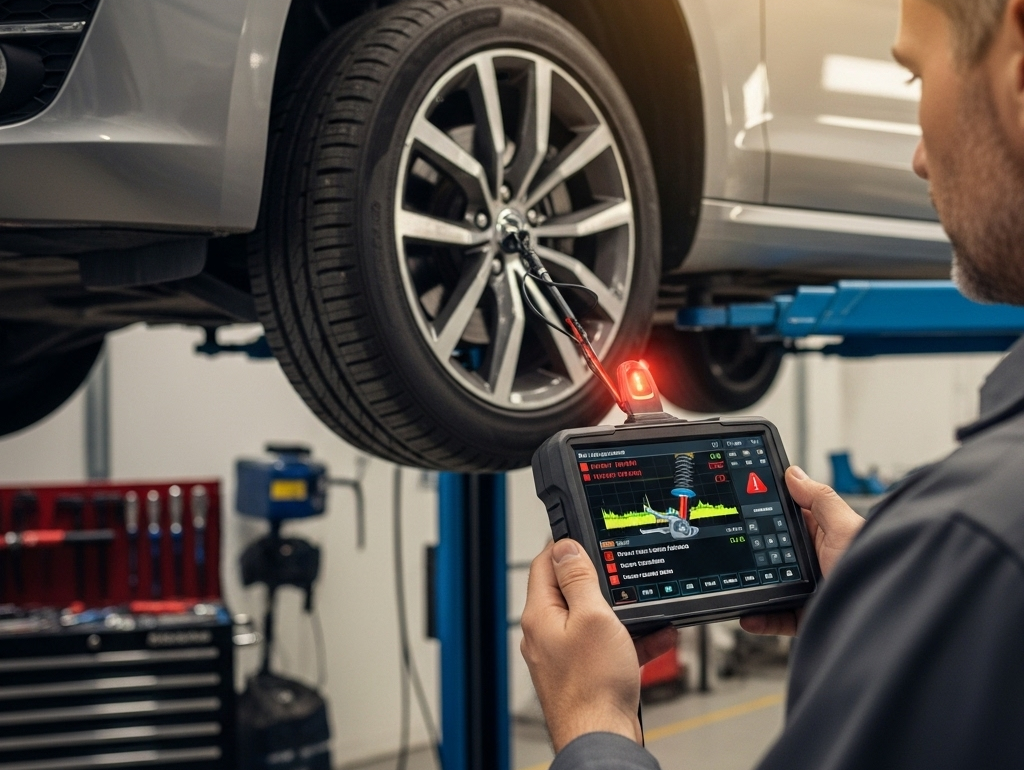
Inspecting Tire Pressure Monitoring Systems wheel pressure systems in electric vehicles electric automobiles often necessitates more than simply visual inspection. Modern OBD2 scanners offer valuable ability to collect TPMS data and locate potential failures. Utilizing these instruments, technicians can interpret fault codes, check sensor quality, and even implement sensor inspections, allowing for precise diagnosis of tire monitoring errors and minimizing repair time. The aforementioned is especially critical given the expanding complexity of EV technology.
Navigating Tire Monitoring Broadcasts: A User's Briefing for Continental Europe, Eastern Asia, and the Continent
Successfully deploying pressure gauges in Continental Europe, Far East, and the US & Canada involves a comprehensive understanding of the fluctuating broadcast ranges they employ. Contrary to a standardized system, various locations commonly employs specific ranges. As an example Eurozone largely bases on 315 MHz band and 433.92 MHz, while North American Region commonly relies on 315 MHz while some newer vehicles might hold 433.92 MHz frequency. Far East presents a broader variety outlook, with various spectral OBD2 regions being employed, contingent upon the area and car brand.
- Reflect on area guidelines regarding tire sensor signal.
- Check your vehicle directory for exact signal.
- Apply a gauge reader capable of reading diverse signals.
